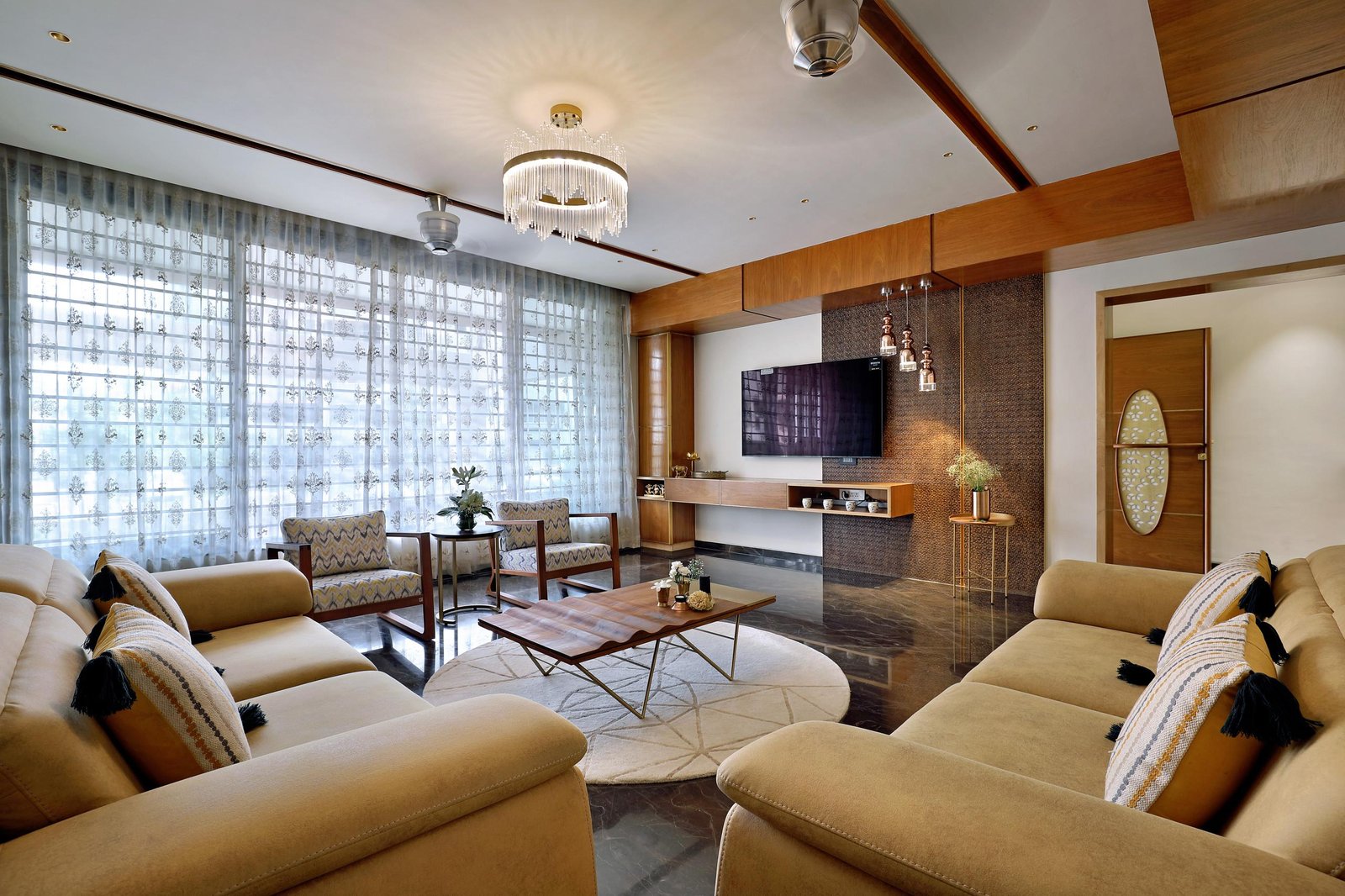
Modern Living Room Interior Design Ideas for Indian Homes
The living room is often the heart of an Indian home. It is where family members relax, guests are welcomed, celebrations take place, and everyday conversations happen. Because of its importance, creating a living room that is comfortable, functional, stylish, and welcoming is a major part of modern home interior design.
Today, Indian homeowners are increasingly combining contemporary aesthetics with practical requirements. Instead of simply copying international design trends, the focus is shifting toward interiors that suit Indian lifestyles, apartment layouts, climate conditions, storage needs, family routines, and cultural preferences.
From minimalist living rooms and modern TV units to false ceilings, layered lighting, wooden wall panels, modular storage, earthy colour palettes, and statement furniture, there are numerous ways to create a beautiful contemporary living space.

What Is Modern Living Room Interior Design?
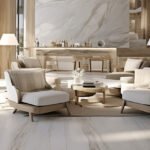
Modern living room interior design focuses on simplicity, functionality, clean lines, comfortable furniture, coordinated colours, efficient storage, and carefully planned lighting.
A modern living room does not necessarily mean an empty room with plain white walls. Modern design can include warmth, textures, artwork, plants, wood, decorative lighting, and personalized elements.
The key is balance.
A successful living room should provide:
- Comfortable seating
- Practical circulation
- Adequate storage
- Appropriate lighting
- A strong focal point
- A coordinated colour palette
- Entertainment space
- Personal character
- Easy maintenance
1. Choose a Functional Living Room Layout
Before selecting furniture or colours, start with the living room layout.
The layout should be based on:
- Room dimensions
- Door and window positions
- Number of family members
- Number of guests
- Television location
- Natural light
- Circulation paths
- Furniture dimensions
Avoid placing too much furniture simply because the room has available space.
A modern living room usually benefits from clear pathways and sufficient space between major furniture pieces.
Popular Layouts
Sofa + accent chair: Ideal for compact and medium-sized rooms.
L-shaped sofa: Useful for larger families and maximizing seating.
Sofa + two chairs: Creates a balanced conversational arrangement.
Sectional seating: Suitable for spacious contemporary living rooms.
2. Create a Focal Point
Every well-designed living room benefits from a visual focal point.
Possible focal points include:
- TV wall
- Artwork
- Statement lighting
- Feature wall
- Designer sofa
- Large window
- Decorative panel
- Indoor plant installation
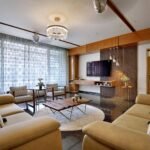
The TV unit and feature wall are particularly popular in Indian living room interiors.
A well-designed TV wall can combine storage, lighting, textures, and entertainment technology into one cohesive feature.
3. Design a Modern TV Unit
The TV wall is often one of the largest visible surfaces in an Indian living room.
Instead of simply mounting the television on a blank wall, consider combining:
- Wooden panels
- Fluted panels
- Veneer
- Laminates
- Stone textures
- Floating cabinets
- Open shelves
- LED strips
- Closed storage
Minimalist TV Unit
A simple wall-mounted cabinet with a wooden panel and subtle lighting can create a clean modern appearance.
Luxury TV Wall
Combine textured panels, stone finishes, concealed lighting, and custom cabinetry for a premium look.
Compact TV Unit
For small apartments, use a slim floating cabinet with vertical storage rather than a bulky entertainment centre.
4. Use a Neutral Colour Palette
Neutral colours are among the most versatile choices for modern living rooms.
Popular options include:
- Warm white
- Beige
- Cream
- Greige
- Taupe
- Soft grey
- Sand
- Light brown
Neutral walls provide flexibility, allowing homeowners to introduce stronger colours through furniture, artwork, cushions, rugs, and décor.
For example:
Warm beige walls + walnut wood + cream sofa + olive cushions
can create a sophisticated contemporary Indian living room.
5. Add an Accent Colour
A completely neutral room can sometimes feel flat.
Introduce an accent colour through:
- Cushions
- Curtains
- Artwork
- Accent chairs
- Rugs
- Decorative objects
- Feature walls
Popular modern combinations include:
Beige + Olive Green
Natural and sophisticated.
Cream + Terracotta
Warm and earthy.
Grey + Mustard
Contemporary with a touch of energy.
White + Navy Blue
Elegant and timeless.
Beige + Deep Green
Premium and nature-inspired.
The accent colour should complement the overall interior rather than compete with it.
6. Add Warm Wooden Elements
Wood can make contemporary interiors feel more welcoming.
It can be introduced through:
- TV panels
- Wall cladding
- Coffee tables
- Side tables
- Shelves
- Flooring
- Ceiling accents
- Furniture
Natural wood tones work particularly well with neutral walls and warm lighting.
For an Indian home, wood can also create a subtle connection between modern design and traditional warmth.
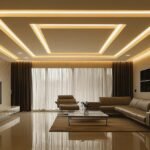
7. Use a False Ceiling With Layered Lighting
The ceiling is an important part of living room design.
A modern false ceiling can conceal wiring, integrate lighting, and add visual depth.
Popular options include:
- Simple gypsum ceiling
- Cove lighting
- Floating ceiling
- Perimeter LED lighting
- Linear LED profiles
- Recessed downlights
- Designer pendant lights
Avoid overly complicated ceiling designs in smaller rooms. A clean perimeter detail with concealed lighting can often produce a more contemporary result.
8. Plan Layered Lighting
Lighting should not come from only one central fixture.
A modern living room can use three main lighting layers.
Ambient Lighting
Provides overall illumination through:
- Downlights
- Ceiling lights
- LED panels
Accent Lighting
Highlights:
- Artwork
- Feature walls
- Decorative shelves
- Architectural details
Decorative Lighting
Creates visual character through:
- Chandeliers
- Pendant lights
- Floor lamps
- Table lamps
- Wall sconces
Layered lighting allows you to change the atmosphere depending on the activity.
9. Select the Right Sofa
The sofa is usually the largest piece of furniture in the living room, so it has a major influence on the interior.
Before buying a sofa, consider:
- Room dimensions
- Number of users
- Fabric
- Colour
- Comfort
- Maintenance
- Armrest size
- Seat depth
- Overall style
For Small Living Rooms
Choose a compact three-seater or streamlined L-shaped sofa.
For Large Living Rooms
Consider an L-shaped sectional or a combination of sofa and accent chairs.
For Indian Families
Washable, durable, and easy-to-maintain fabrics can be particularly practical.
10. Add an Area Rug
An area rug can visually connect the seating arrangement.
It can:
- Define the seating zone
- Add texture
- Introduce colour
- Improve comfort
- Create visual warmth
The rug should generally be appropriately sized for the furniture arrangement rather than being too small and floating independently in the centre of the room.
Neutral rugs work well in minimalist interiors, while patterned rugs can add personality to simpler rooms.
11. Choose a Stylish Coffee Table
A coffee table can become an important centrepiece.
Popular modern options include:
- Round wooden tables
- Glass-top tables
- Nested tables
- Stone-top tables
- Minimalist metal tables
- Marble-look tables
For homes with children or limited space, rounded edges and lightweight designs may be practical considerations.
12. Add Smart Storage
Indian homes often require considerable storage.
Instead of adding bulky cabinets, integrate storage into the interior design.
Useful options include:
- Floating TV cabinets
- Built-in shelves
- Closed storage units
- Window seating with storage
- Console cabinets
- Tall storage
- Display niches
Open vs Closed Storage
Open shelves: Good for books, plants, artwork, and decorative items.
Closed cabinets: Better for hiding everyday clutter.
A combination of both usually provides the best balance.
13. Design a Stylish Entrance Area
If the main door opens directly into the living room, create a small entrance zone.
You can use:
- Console table
- Mirror
- Accent wall
- Wooden partition
- Vertical slats
- Indoor plants
- Decorative lighting
A partition can also provide privacy without completely closing the room.
14. Use Partitions Without Making the Room Feel Smaller
Open-plan homes often need subtle separation between areas.
Instead of constructing a solid wall, consider:
- Wooden slats
- Fluted panels
- Glass partitions
- Half-height partitions
- Decorative screens
- Open shelving
These solutions can separate the living room from the dining area while maintaining visual openness.
15. Bring Nature Indoors
Biophilic interior design is becoming increasingly popular in contemporary residential interiors.
You can introduce natural elements through:
- Indoor plants
- Natural wood
- Stone textures
- Natural fabrics
- Earthy colours
- Large windows
- Green feature walls
Popular low-maintenance indoor plants can also add freshness without requiring a major redesign.
16. Add Wall Art and Personal Décor
A modern living room should still reflect the personality of the people who live there.
Consider:
- Family photographs
- Abstract artwork
- Indian art
- Sculptures
- Decorative mirrors
- Handcrafted objects
- Travel souvenirs
- Books
Avoid filling every wall. A few carefully selected pieces generally create a more refined appearance.
17. Use Mirrors Strategically
Mirrors can make a living room appear brighter and more spacious.
They work particularly well when placed where they can reflect:
- Natural light
- A window
- Decorative lighting
- An attractive part of the room
Large mirrors can become statement pieces, while smaller decorative mirrors can be grouped to create an artistic wall.
18. Design for Indian Climate and Lifestyle
Indian homes experience a wide range of climates, from humid coastal regions to hot and dry areas and cooler northern climates.
Material selection should therefore consider local conditions.
For example:
- Easy-to-clean surfaces can be useful in dusty environments.
- Breathable fabrics can be suitable for warmer regions.
- Moisture-resistant materials may be important in humid areas.
- Durable flooring can be beneficial for high-traffic homes.
Local climate should be considered alongside aesthetics when selecting materials.
19. Create a Multi-Functional Living Room
Modern Indian homes often require rooms to perform multiple functions.
A living room might serve as:
- Family lounge
- Guest area
- Entertainment space
- Reading corner
- Work-from-home area
- Study area
- Occasional sleeping space
Furniture should therefore be flexible where possible.
For example, a compact desk can be incorporated into a wall storage system, or an accent chair can double as a reading seat.
20. Create a Small Reading Corner
If space permits, create a dedicated reading corner using:
- Comfortable armchair
- Floor lamp
- Small side table
- Bookshelf
- Indoor plant
A window-side location can provide natural light during the day.
This small addition can make the living room feel more personalized.
21. Choose the Right Curtains
Curtains contribute significantly to the overall appearance of a living room.
Popular choices include:
- Sheer curtains
- Linen-look curtains
- Cotton curtains
- Layered curtains
- Neutral blackout curtains
For smaller rooms, curtains installed closer to ceiling height can create an impression of greater vertical height.
Use curtain colours that complement rather than exactly match the sofa.
2. Use Textures to Add Depth
Modern interiors do not need to be completely plain.
Combine textures such as:
- Wood
- Fabric
- Stone
- Glass
- Metal
- Fluted panels
- Rugs
- Cushions
For example:
Beige wall + wooden TV panel + textured sofa + soft rug + glass coffee table
can create visual interest without using too many colours.
23. Try a Modern Indian Interior Style
Modern Indian living room design can combine contemporary planning with traditional elements.
Consider pairing:
- Modern sofa + Indian artwork
- Contemporary lighting + handcrafted décor
- Minimalist furniture + wooden carvings
- Neutral walls + traditional textiles
- Modern TV unit + brass accessories
This approach can create an interior that feels contemporary while retaining cultural character.
24. Consider Vastu Preferences
Some Indian homeowners prefer to incorporate Vastu principles into living room planning.
Depending on individual preferences, Vastu considerations may influence:
- Furniture placement
- Room orientation
- Colour selection
- Entrance positioning
- Decorative elements
If Vastu is important to your project, discuss these requirements before finalizing the layout and furniture arrangement.
25. Modern Luxury Living Room Ideas
For a luxury living room, focus on quality and proportion rather than simply adding expensive-looking elements.
Consider:
- Premium upholstery
- Custom TV walls
- Elegant marble or stone textures
- Designer lighting
- Wood veneer
- Statement artwork
- Custom furniture
- Layered ceiling design
A restrained palette such as cream + beige + walnut + brass accents can create a sophisticated luxury aesthetic.
26. Small Living Room Interior Ideas
A compact living room can still look stylish.
Try:
- Light wall colours
- Compact furniture
- Floating TV units
- Wall-mounted shelves
- Mirrors
- Minimal décor
- Multifunctional furniture
- Vertical storage
- Concealed lighting
Avoid oversized sofas, bulky cabinets, and too many decorative objects.
The goal is to maximize functionality without visually overcrowding the space.
27. Modern Living Room Ideas for 2BHK Apartments
Most 2BHK apartments have limited living room space, so efficient planning is important.
A practical combination could include:
Compact L-shaped sofa + floating TV unit + storage console + false ceiling + layered lighting + neutral walls
Add one or two statement elements rather than decorating every surface.
28. Modern Living Room Ideas for 3BHK Homes
A 3BHK home may provide greater flexibility.
You can create:
- Larger seating arrangement
- Dedicated entertainment zone
- Reading corner
- Display wall
- Feature lighting
- Decorative partition
- Larger storage system
The additional space should be used thoughtfully rather than simply filling the room with furniture.
29. Smart Home Features
Technology can be integrated into modern living rooms without making it visually distracting.
Potential features include:
- Smart lighting
- Automated curtains
- Smart switches
- Voice-controlled devices
- Hidden charging points
- Home theatre systems
- Concealed wiring
- Smart TV integration
Plan these systems during the interior design stage so that cables and devices can be integrated neatly.
30. Sustainable Living Room Design
Sustainability is increasingly influencing modern interior choices.
You can consider:
- Energy-efficient LED lighting
- Durable furniture
- Low-VOC paints
- Natural materials
- Locally sourced products
- Reusable décor
- Long-lasting finishes
The most sustainable interior is often one that is thoughtfully planned and designed to last rather than frequently replaced.
Common Living Room Design Mistakes
Overcrowding the Space
Too much furniture can restrict movement and make the room feel smaller.
Using Too Many Colours
A limited palette usually creates a more cohesive appearance.
Ignoring Lighting
Even beautiful furniture can look dull under poor lighting.
Choosing Furniture Without Measuring
Always check dimensions before purchasing.
Excessive Decoration
Modern interiors benefit from visual breathing space.
Ignoring Storage
Without adequate storage, everyday items can quickly create clutter.
Following Trends Blindly
Your living room should suit your lifestyle rather than simply copying social-media interiors.
How to Plan Your Living Room Interior Step by Step
Step 1: Measure the Room
Record wall lengths, ceiling height, doors, windows, and architectural features.
Step 2: Identify Requirements
Determine seating, TV, storage, work, and entertainment requirements.
Step 3: Create a Layout
Place major furniture before selecting decorative elements.
Step 4: Choose a Colour Palette
Select a dominant colour, secondary shade, and accent colour.
Step 5: Plan the TV Wall
Integrate entertainment, storage, and design.
Step 6: Design the Ceiling
Coordinate the false ceiling with lighting and room proportions.
Step 7: Plan Lighting
Combine ambient, task, accent, and decorative lighting.
Step 8: Select Materials
Coordinate flooring, furniture, wall finishes, and wood tones.
Step 9: Add Décor
Introduce artwork, plants, cushions, rugs, and accessories.
Step 10: Review Functionality
Make sure the room remains comfortable and easy to move through.
A modern living room should be more than visually attractive. It should be a comfortable and functional space that reflects the personality and lifestyle of the family.
The best modern living room interior design ideas for Indian homes combine thoughtful space planning with practical storage, comfortable furniture, coordinated colours, layered lighting, natural materials, and personalized décor.
Whether you live in a compact apartment, a spacious 3BHK, an independent house, or a luxury villa, the principles remain the same: understand the space, prioritize functionality, create visual balance, and design around the people who use the room.
From a minimalist TV wall and elegant false ceiling to warm wooden accents, smart storage, indoor plants, and contemporary furniture, even small changes can transform the character of your living room.
A professionally planned living room can ultimately become the perfect balance of comfort, style, functionality, and modern Indian living.