How False Ceilings Improve Interior Design and Lighting
A ceiling is often one of the most overlooked elements of interior design, yet it can dramatically influence how a room looks, feels, and functions. A well-designed false ceiling can transform an ordinary interior into a sophisticated and visually balanced space while improving lighting, concealing services, enhancing acoustics, and creating a more comfortable atmosphere.
Modern false ceiling designs are no longer limited to simple gypsum borders or decorative patterns. Today, homeowners and designers can choose from minimalist false ceilings, layered ceilings, cove lighting, recessed lighting, wooden finishes, stretch ceilings, floating ceiling designs, and smart lighting solutions.
Whether you are designing a living room, bedroom, modular kitchen, office, showroom, hotel, or commercial space, the right ceiling design can become an important part of the overall interior concept.

What Is a False Ceiling?
A false ceiling, also known as a suspended or dropped ceiling, is an additional ceiling installed below the original structural ceiling. It is generally supported by a framework and can be made using materials such as gypsum board, POP, metal, wood, PVC, or other specialized ceiling systems.
The space between the original ceiling and false ceiling can be used to accommodate:
- Electrical wiring
- Air-conditioning ducts
- Lighting fixtures
- Speakers
- Internet and communication cables
- Security equipment
- Pipes and other services
This makes false ceilings both a decorative and functional interior design element.
Why Are False Ceilings Important in Interior Design?
A room consists of several visual surfaces—walls, floors, furniture, windows, and ceilings. When these elements are designed together, they create a cohesive interior.
The ceiling can help establish:
- Visual balance
- Depth
- Proportion
- Mood
- Lighting hierarchy
- Architectural character
A plain ceiling may leave a room feeling unfinished, while a carefully designed ceiling can provide a polished appearance.
However, effective false ceiling design is not about adding as many decorative elements as possible. Modern interiors increasingly favour clean lines, subtle layers, integrated lighting, and functional details.
1. False Ceilings Create a More Stylish Interior
One of the biggest advantages of a false ceiling is its ability to improve the visual appearance of a room.
A designer can use different levels, shapes, materials, textures, and lighting to create a distinctive ceiling.
For example:
Minimalist Ceiling
A simple rectangular or perimeter design with concealed LED lighting can complement a contemporary interior.
Layered Ceiling
Multiple levels can add depth and architectural interest.
Floating Ceiling
A suspended central panel with indirect lighting can create the impression that the ceiling is floating.
Wooden Ceiling
Wooden panels or wood-look finishes can introduce warmth and texture.
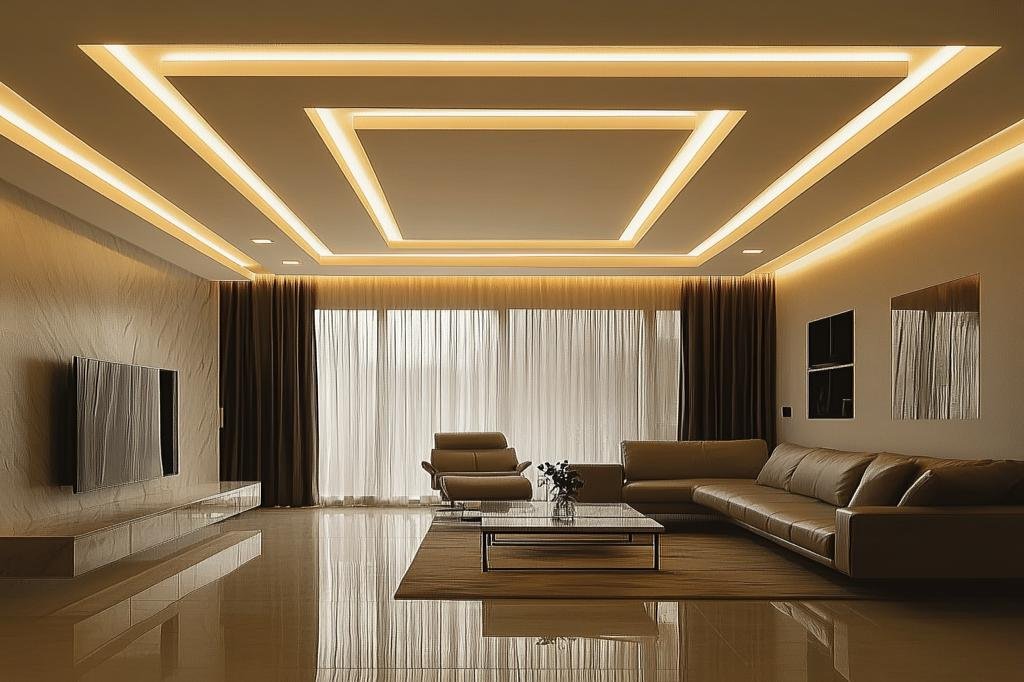
Cove Ceiling
Cove lighting can create a soft glow around the perimeter of the room.
The ideal design depends on the size, height, function, and overall style of the space.
2. False Ceilings Improve Lighting
Lighting is perhaps one of the most important functional benefits of a false ceiling.
Instead of depending on a single central light fixture, designers can create layered lighting using different types of fixtures.
A modern ceiling may incorporate:
- Recessed spotlights
- Downlights
- LED strips
- Cove lights
- Pendant lights
- Track lights
- Linear lights
- Decorative fixtures
This allows different lighting levels to be used for different activities.
For example, a living room can have general illumination from recessed lights, soft indirect lighting from cove LEDs, and decorative lighting above a coffee table or seating area.
3. Creates Soft and Indirect Lighting
Direct lighting can sometimes feel harsh, especially when strong fixtures are pointed directly toward people.
Cove lighting offers an alternative by hiding the LED source inside a ceiling recess or profile so that light reflects off the ceiling or wall.
This produces:
- Soft illumination
- Reduced glare
- Visual depth
- A premium appearance
- A relaxing atmosphere
Cove lighting is particularly popular in bedrooms, living rooms, restaurants, hotels, and luxury interiors.
4. Helps Define Different Zones
Open-plan interiors can sometimes lack visual separation.
A false ceiling can help define individual zones without constructing walls.
For example, in an open living and dining area, designers can use:
- A different ceiling level above the dining table
- Pendant lighting over the dining area
- A linear ceiling design over the living area
- Different lighting temperatures
This creates visual boundaries while keeping the space open.
The same approach can be used in:
- Open kitchens
- Offices
- Showrooms
- Reception areas
- Studio apartments
- Retail spaces
5. Conceals Electrical Wiring and Services
Modern interiors contain numerous electrical and technological systems.
Wiring may be required for:
- Lights
- Fans
- Speakers
- CCTV
- Wi-Fi equipment
- Projectors
- Air conditioning
- Smart-home systems
Instead of leaving cables exposed, a false ceiling can conceal them and maintain a clean appearance.
This is especially valuable in modern office interior design, where multiple technical systems may need to be integrated into the ceiling.
6. Integrates Air Conditioning
False ceilings can also help integrate air-conditioning systems.
Depending on the HVAC design, ceiling spaces can accommodate ducts, vents, and diffusers while maintaining a neat visual appearance.
However, HVAC requirements should be planned before the ceiling installation begins. Improper coordination can lead to unnecessary height loss or difficulties during maintenance.
7. Adds Visual Depth to Small Rooms
A well-designed ceiling can make a room feel more spacious.
For compact rooms, designers can use:
- Simple perimeter designs
- Light colours
- Recessed lighting
- Vertical wall lighting
- Minimal decorative elements
- Continuous LED lines
The objective should be to avoid making the ceiling visually heavy.
A complicated multi-layer design in a small room can sometimes have the opposite effect and make the space feel smaller.
8. Creates a Luxury Look
A premium ceiling design can give an interior a sophisticated appearance without relying exclusively on expensive furniture or wall finishes.
Combining:
Gypsum + recessed lights + cove lighting + elegant wall finishes
can create a high-end appearance.
For luxury residential projects, designers may also combine false ceilings with:
- Wooden accents
- Metallic details
- Decorative mouldings
- Statement chandeliers
- Custom LED profiles
- Textured finishes
The key is maintaining balance.
9. Supports Different Interior Design Styles
False ceilings are highly adaptable.
Modern Interior
Use straight lines, recessed lights, and concealed LEDs.
Minimalist Interior
Use a simple ceiling plane with subtle lighting.
Luxury Interior
Use layered ceilings, chandeliers, metallic accents, and detailed lighting.
Contemporary Interior
Combine geometric forms with linear lighting.
Industrial Interior
Consider exposed services or simple suspended ceiling systems rather than heavily decorative designs.
Traditional Interior
Decorative borders, wooden elements, or classic ceiling details can complement the design.
10. Enhances Bedroom Ambience
The bedroom requires a different lighting environment from a living room or kitchen.
A bedroom false ceiling can incorporate warm, indirect lighting to create a relaxing atmosphere.
Popular ideas include:
- Perimeter cove lighting
- Recessed warm-white lights
- Simple central panel
- Floating ceiling
- Bed-back lighting coordination
- Minimal geometric designs
Avoid excessive brightness in bedrooms. The goal should be comfort rather than maximum illumination.
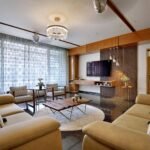
11. Improves Living Room Design
The living room is often the focal point of a home, so its ceiling can have a major visual impact.
Popular living room false ceiling ideas include:
- Layered gypsum ceiling
- Cove lighting
- Recessed spotlights
- Central chandelier
- Floating ceiling
- Wooden ceiling accents
- Linear LED designs
A large living room may support a more dramatic ceiling, while a compact room generally benefits from a cleaner design.
12. Makes Kitchen Lighting More Functional
The kitchen requires practical illumination because food preparation, cooking, and cleaning require good visibility.
A false ceiling can incorporate:
- Recessed downlights
- Task lighting
- Pendant lights
- Under-cabinet LEDs
- Linear lighting
The ceiling lighting should work together with cabinet lighting rather than being the only source of illumination.
For example, strong task lighting over countertops can reduce shadows while preparing food.
13. False Ceilings in Office Interiors
Office ceilings need to balance aesthetics, lighting, acoustics, and technology.
A commercial false ceiling can accommodate:
- LED panel lights
- Linear lights
- Air-conditioning diffusers
- Smoke detectors
- Sprinklers
- Speakers
- CCTV
- Data cabling
Modern office designs often use suspended acoustic systems to improve sound management while creating a distinctive ceiling aesthetic.
For open-plan workplaces, combining acoustic ceiling solutions with smart lighting can create a more comfortable working environment.
14. False Ceilings for Showrooms and Commercial Spaces
Showroom ceilings have an additional responsibility: they need to help products stand out.
Accent lighting can be directed toward:
- Display units
- Product walls
- Feature areas
- Signage
- Architectural elements
Track lights and adjustable spotlights can provide flexibility when product displays change.
For retail environments, ceiling design should therefore be planned alongside the merchandising strategy.
Popular False Ceiling Materials
Gypsum Board
Gypsum is one of the most popular materials for modern residential and commercial false ceilings.
Advantages:
- Smooth finish
- Easy to shape
- Suitable for recessed lighting
- Suitable for minimalist designs
- Can be painted
- Creates clean architectural lines
POP
Plaster of Paris can be used for decorative ceiling details and customized shapes.
It is commonly associated with ornamental ceiling designs.
Wood
Wood or wood-look panels can add warmth and natural character.
They work particularly well in:
- Living rooms
- Offices
- Restaurants
- Hotels
- Luxury interiors
Metal
Metal ceiling systems are commonly used in commercial and institutional applications because of their durability and serviceability.
PVC
PVC panels can be used in certain applications where moisture resistance and easy maintenance are priorities.
Material selection should always consider the room’s conditions, fire-safety requirements, maintenance needs, budget, and design intent.
False Ceiling and LED Lighting: The Perfect Combination
LED technology has expanded the possibilities of ceiling design.
LED lighting can be integrated into:
- Cove profiles
- Recessed channels
- Linear ceiling designs
- Floating panels
- Wall-ceiling transitions
- Decorative features
Warm White
Suitable for bedrooms, lounges, and relaxing environments.
Neutral White
Useful for many residential and office environments.
Cool White
Can provide a crisp appearance and may be suitable for task-oriented areas, although excessive cool lighting can feel harsh.
The colour temperature should be selected according to the function and mood of the space.
How False Ceilings Can Improve Energy Efficiency
A false ceiling itself does not automatically make a room energy-efficient.
However, it can support an efficient lighting strategy by allowing designers to use:
- LED fixtures
- Zoned lighting
- Dimmers
- Sensors
- Smart lighting controls
- Task lighting
Instead of illuminating the entire room at maximum brightness, different areas can be illuminated according to their use.
This can reduce unnecessary electricity consumption.
Acoustic Benefits of False Ceilings
Certain ceiling systems can contribute to acoustic comfort.
Acoustic ceiling tiles and specialized panels can help manage sound reflection in offices, conference rooms, restaurants, studios, and commercial spaces.
This can be particularly beneficial in:
- Open offices
- Meeting rooms
- Home theatres
- Restaurants
- Classrooms
- Reception areas
The acoustic performance depends on the specific material and system, so designers should choose products based on the required performance rather than appearance alone.
False Ceiling Maintenance Considerations
Before installing a false ceiling, think about future maintenance.
Electrical equipment, AC systems, and other services may eventually require access.
Therefore, a good design should include appropriate access panels where required.
Consider:
- Dust accumulation
- LED replacement
- Electrical maintenance
- AC servicing
- Moisture exposure
- Paint touch-ups
A ceiling should be designed for long-term practicality, not just initial appearance.
Common False Ceiling Design Mistakes
1. Excessive Layers
Too many levels can make a room look crowded.
2. Ignoring Ceiling Height
A false ceiling reduces the clear height of the room. This should be considered before finalizing the design.
3. Poor Lighting Placement
Even an attractive ceiling can fail if lights create glare or shadows.
4. Not Coordinating Services
Electrical, HVAC, fire safety, and ceiling designs need to be coordinated.
5. Choosing Design Over Function
A decorative ceiling that makes maintenance difficult may not be a practical choice.
6. Using Too Many Different Light Types
A room can quickly become visually chaotic if too many lighting styles are combined.
7. Ignoring Fire and Moisture Requirements
The appropriate ceiling material should be selected based on the environment and applicable safety requirements.
How to Choose the Right False Ceiling Design
Before finalizing your design, consider these questions:
What is the room’s purpose?
A bedroom requires a different lighting approach from an office or showroom.
How high is the original ceiling?
Available height will determine how much layering is practical.
Where are the electrical and HVAC services?
Their locations should be incorporated into the ceiling plan.
How much maintenance will be required?
Choose a system that provides appropriate access to important services.
What is the overall interior style?
The ceiling should complement the walls, flooring, furniture, and architectural details.
What is your budget?
Simple gypsum designs may be more economical than highly customized ceiling systems.
Future Trends in False Ceiling Design
Modern ceiling design is moving toward minimalism, integrated lighting, smart technology, sustainability, and multifunctional spaces.
Some emerging trends include:
- Linear LED lighting
- Smart lighting controls
- Sensor-based lighting
- Minimalist ceiling profiles
- Floating ceiling designs
- Acoustic ceiling solutions
- Natural wood-look finishes
- Energy-efficient lighting
- Integrated technology
- Flexible commercial ceiling systems
Rather than simply decorating the fifth wall, designers are increasingly treating the ceiling as an integrated part of the architecture.
A false ceiling can completely change the character of an interior when it is thoughtfully designed. It can improve visual proportions, conceal services, organize lighting, enhance ambience, support acoustics, and create a stronger connection between different elements of the room.
The best false ceiling design is not necessarily the most elaborate. It is the one that suits the room’s size, purpose, architecture, lighting requirements, maintenance needs, and overall design language.
For homeowners and businesses planning a renovation or new interior, combining modern false ceiling design with layered LED lighting can create a space that is both attractive and functional.
Whether you are designing a living room, bedroom, modular kitchen, office, showroom, restaurant, or commercial interior, professional planning can ensure that the ceiling contributes to the complete design rather than becoming an isolated decorative feature.