Modern Bedroom Design Ideas to Transform Your Home
The bedroom is one of the most personal spaces in any home. It is where you begin and end your day, relax after work, and enjoy uninterrupted time away from the busy outside world. A thoughtfully designed bedroom can improve not only the appearance of your home but also the overall comfort and usability of your private space.
Modern bedroom interior design is moving beyond simply choosing attractive furniture and wall colours. Today’s bedrooms focus on a combination of comfort, functionality, smart storage, layered lighting, natural materials, calming colours, personalized décor, and clean contemporary aesthetics.
Whether you have a compact apartment bedroom, a spacious master bedroom, or a luxury bedroom in a villa, the right design can transform an ordinary room into a stylish and relaxing retreat.

What Makes a Bedroom Design Modern?
Modern bedroom design is generally characterized by simplicity, functionality, clean lines, carefully selected materials, and a balanced colour palette.
A contemporary bedroom may include:
- Minimalist furniture
- Custom wardrobes
- Upholstered beds
- Wooden wall panels
- Fluted wall designs
- Neutral colour schemes
- False ceilings
- Cove lighting
- Smart storage
- Natural textures
- Indoor plants
- Personalized décor
Modern does not mean that everything has to be plain. Texture, lighting, artwork, wood, fabrics, and accent colours can add personality while maintaining a clean appearance.
1. Start With a Functional Bedroom Layout
Before selecting colours or furniture, plan the bedroom layout.
Consider the location of:
- Bed
- Wardrobe
- Dressing table
- Side tables
- Windows
- Doors
- TV
- Study desk
- Bathroom entrance
- Electrical points
The bed is usually the focal point, so its position should allow comfortable movement around it.
Avoid placing furniture where it blocks windows, doors, or natural circulation paths.
For Small Bedrooms
Use:
- Compact beds
- Wall-mounted side tables
- Sliding wardrobes
- Floating furniture
- Vertical storage
For Large Bedrooms
You can incorporate:
- King-size bed
- Lounge chair
- Reading corner
- Dressing area
- Study desk
- Larger wardrobe
- Feature wall
2. Choose a Calming Colour Palette
Colour has a major influence on the atmosphere of a bedroom.
Popular modern bedroom colours include:
- Warm white
- Beige
- Cream
- Greige
- Soft grey
- Sage green
- Olive
- Powder blue
- Taupe
- Terracotta
Warm Neutrals
Beige, cream, taupe, and warm white create a soft and sophisticated environment.
Green
Sage and olive green can introduce a natural feeling.
Blue
Soft blue and muted navy can create a calm and elegant atmosphere.
Earthy Shades
Terracotta, sand, brown, and clay tones can add warmth.
Rather than using several strong colours, select one dominant colour and introduce complementary shades through furniture and décor.
3. Create a Statement Bed Wall
The wall behind the bed provides an excellent opportunity to create a focal point.
Popular bedroom feature wall ideas include:
- Wooden panels
- Fluted panels
- Upholstered panels
- Wallpaper
- Textured paint
- Stone-look finishes
- Decorative moulding
- Backlit panels
A simple feature wall can make the bedroom feel professionally designed without requiring decoration throughout the entire room.
Example
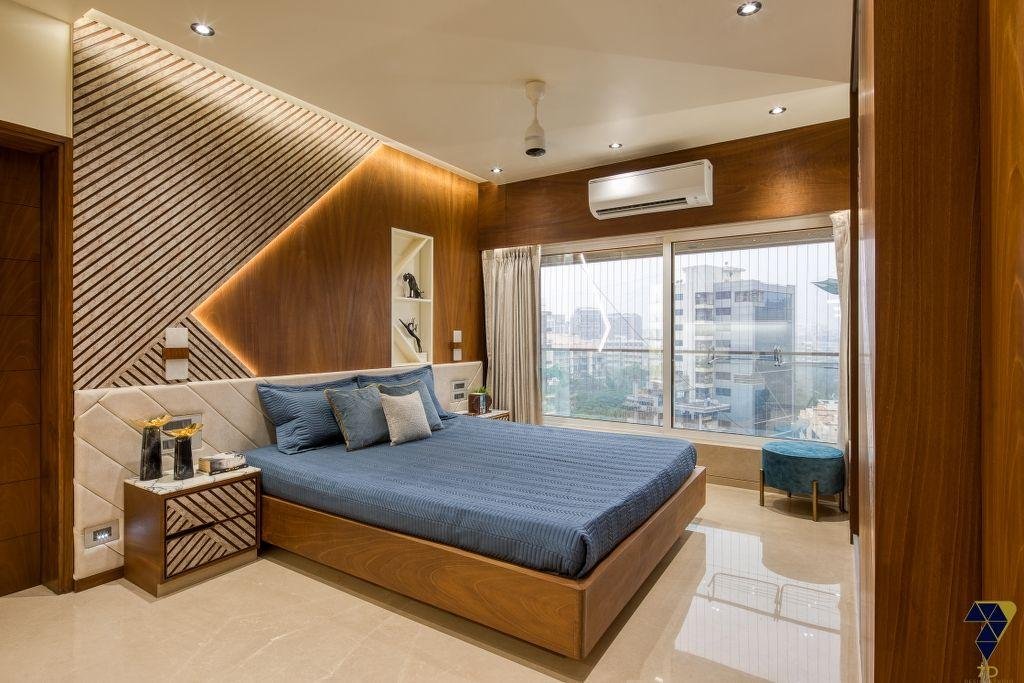
Warm beige walls + walnut bed wall + cream upholstery + warm LED lighting
creates a sophisticated contemporary look.
4. Design a Comfortable Bed and Headboard
The bed is the most important piece of bedroom furniture.
For a modern bedroom, consider an upholstered or wooden headboard that complements the overall interior.
Upholstered Headboard
Creates a soft, luxurious appearance.
Wooden Headboard
Provides warmth and natural texture.
Full-Wall Headboard
A full-width headboard can visually increase the importance of the bed wall and create a strong focal point.
Integrated Headboard
A custom headboard can include:
- Bedside tables
- Charging points
- Reading lights
- Storage
- Decorative niches
This makes the design both attractive and functional.
5. Add Layered Bedroom Lighting
Good lighting can completely change a bedroom.
Instead of relying on a single ceiling light, use several layers.
Ambient Lighting
Provides general illumination.
Examples:
- Recessed downlights
- Ceiling fixtures
- Cove lighting
Task Lighting
Useful for:
- Reading
- Dressing
- Working
Examples include bedside lamps and wall-mounted reading lights.
Accent Lighting
Highlights:
- Feature walls
- Artwork
- Shelves
- Architectural details
Decorative Lighting
Pendant lights, sconces, and designer lamps can add personality.
Warm lighting is often preferred in bedrooms because it can create a softer evening atmosphere.
6. Use a Modern False Ceiling
A false ceiling can provide both decorative and functional benefits.
It can conceal wiring and accommodate:
- Recessed lights
- LED strips
- Cove lighting
- Fans
- Air-conditioning services
For modern bedrooms, simple designs are often more effective than heavily decorative ceilings.
Popular ideas include:
- Perimeter cove lighting
- Floating ceiling panels
- Minimalist gypsum designs
- Linear LED profiles
- Wooden ceiling accents
The ceiling design should be proportional to the room’s height and size.
7. Choose the Right Wardrobe Design
Wardrobes occupy a significant amount of bedroom wall space, so their design strongly influences the room’s appearance.
Popular modern wardrobe options include:
Sliding Wardrobe
Ideal for rooms where swing-door clearance is limited.
Hinged Wardrobe
Provides easy access and can offer a wide range of internal configurations.
Full-Height Wardrobe
Uses vertical space efficiently and provides additional storage.
Glass-Finish Wardrobe
Can create a contemporary appearance but may require more frequent cleaning.
Wood-Finish Wardrobe
Adds warmth and works well with modern interiors.
8. Plan Smart Wardrobe Storage
A beautiful wardrobe should also be highly functional.
Consider dedicated areas for:
- Hanging clothes
- Folded clothes
- Shoes
- Accessories
- Bags
- Watches
- Jewellery
- Luggage
- Seasonal clothing
Useful accessories include:
- Pull-out baskets
- Drawer organizers
- Trouser racks
- Shoe racks
- Soft-close drawers
- Internal LED lighting
Planning internal storage before fabrication can significantly improve everyday usability.
9. Add a Stylish Dressing Area
If space permits, create a dedicated dressing zone.
It may include:
- Dressing table
- Large mirror
- Drawer storage
- Vanity lighting
- Stool or chair
A wall-mounted dressing table can be particularly useful in compact bedrooms.
For a luxury appearance, consider backlit mirrors and integrated storage.
10. Use Mirrors to Make the Room Feel Larger
Mirrors can visually expand a bedroom by reflecting light and creating a greater sense of depth.
Consider using mirrors on:
- Wardrobe doors
- Dressing areas
- Feature walls
- Decorative panels
A large mirror positioned opposite or near a window can also help distribute natural light throughout the room.
However, avoid using too many mirrors, as excessive reflections can make the room feel visually busy.
11. Add a Reading Corner
A small reading corner can make a bedroom more functional.
You only need:
- Comfortable chair
- Floor or wall lamp
- Small side table
- Bookshelf
If your bedroom has a large window, the area beside it can be an ideal location.
12. Create a Work-from-Home Corner
Bedrooms in modern homes sometimes need to accommodate a compact workspace.
A simple desk can be integrated into:
- Wardrobe cabinetry
- Window area
- Floating wall storage
- Built-in furniture
Keep the workstation visually organized so that it does not dominate the relaxing character of the bedroom.
13. Use Natural Materials
Natural textures can make modern bedrooms feel warm rather than sterile.
Popular choices include:
- Wood
- Rattan
- Linen
- Cotton
- Stone textures
- Natural-finish fabrics
Wooden furniture combined with neutral walls and soft textiles can create a comfortable modern Indian bedroom.
14. Introduce Textures
A monochromatic bedroom can still have plenty of visual interest when different textures are layered.
Combine:
- Upholstered headboard
- Wooden panels
- Soft curtains
- Textured rugs
- Cushions
- Throws
- Matte wall finishes
For example:
Beige walls + fluted wood + upholstered bed + textured rug
creates depth without requiring strong colours.
15. Select the Right Curtains
Curtains influence both appearance and comfort.
Popular options include:
- Sheer curtains
- Blackout curtains
- Linen-look curtains
- Layered curtains
- Cotton curtains
For bedrooms that receive strong sunlight, blackout curtains can help control light during sleeping hours.
Combining sheer and blackout curtains gives flexibility between daytime privacy and nighttime darkness.
16. Choose Comfortable Bedroom Flooring
Flooring should complement the rest of the interior.
Popular choices include:
Wooden Flooring
Creates a warm and premium appearance.
Large-Format Tiles
Provide a clean contemporary look.
Carpet or Area Rugs
Add softness and warmth.
Wood-Look Flooring
Can provide the appearance of timber with different maintenance and cost characteristics depending on the product.
An area rug beside the bed can also improve comfort underfoot.
17. Add an Area Rug
A rug can make the bedroom feel warmer and more complete.
It can:
- Define the bed area
- Add texture
- Introduce subtle colour
- Improve comfort
- Reduce visual emptiness
Choose a rug size that works with the bed and surrounding furniture rather than using a very small rug that looks disconnected.
18. Use Smart Storage for Small Bedrooms
Small bedrooms require careful planning.
Instead of adding multiple standalone cabinets, consider integrated storage.
Useful solutions include:
- Bed storage
- Full-height wardrobes
- Floating shelves
- Under-bed drawers
- Window-seat storage
- Wall-mounted dressing units
- Built-in study desks
Vertical storage is particularly useful because it increases capacity without consuming additional floor area.
19. Design a Minimalist Bedroom
Minimalism works particularly well in bedrooms because the goal is to create a calm environment.
A minimalist bedroom can use:
- Neutral colours
- Simple furniture
- Clean lines
- Concealed storage
- Limited décor
- Soft lighting
- Natural textures
The important principle is not simply having fewer objects, but ensuring that every element has a purpose.
20. Create a Modern Luxury Bedroom
Luxury bedroom design is about proportion, material quality, lighting, and detailing.
Consider:
- Upholstered headboard
- Premium wood finishes
- Stone-look surfaces
- Layered lighting
- Custom wardrobes
- Designer bedside tables
- Elegant curtains
- Statement artwork
Colours such as cream, taupe, deep green, navy, walnut, and warm grey can work particularly well in sophisticated bedroom interiors.
21. Modern Indian Bedroom Design
A modern Indian bedroom can combine contemporary furniture with subtle traditional influences.
Ideas include:
- Contemporary bed + Indian artwork
- Neutral palette + traditional textiles
- Modern lighting + handcrafted décor
- Wooden panels + brass accessories
- Minimalist furniture + Indian patterns
This creates a personalized space without making the room appear overly traditional.
22. Consider Vastu Preferences
Some Indian homeowners prefer to incorporate Vastu principles into bedroom planning.
Depending on individual preferences, Vastu considerations may influence:
- Bedroom location
- Bed direction
- Furniture placement
- Colour selection
- Mirror placement
- Decorative elements
If Vastu is important to you, discuss these requirements before finalizing the layout and furniture.
23. Bring Indoor Plants Into the Bedroom
Plants can add freshness and natural character to an interior.
Depending on the room’s natural light and maintenance requirements, suitable indoor plants can be incorporated into:
- Window corners
- Bedside areas
- Shelves
- Empty corners
Do not overcrowd the room with plants. One or two carefully positioned plants may be enough.
24. Add Personalized Décor
Your bedroom should feel personal.
Consider:
- Family photographs
- Artwork
- Books
- Travel memories
- Decorative objects
- Handmade accessories
Instead of filling every surface, choose a few meaningful pieces.
This creates a more sophisticated appearance while maintaining a clean modern aesthetic.
25. Use a Feature Wall Instead of Decorating Every Wall
One strong feature wall can often have more impact than decorating every wall differently.
The bed wall is generally the best location.
You could use:
Wood + warm LED
or
Wallpaper + upholstered headboard
or
Textured paint + wall sconces
The remaining walls can remain relatively simple.
26. Add Smart Home Technology
Technology can improve comfort without compromising the bedroom’s appearance.
Modern bedroom interiors can integrate:
- Smart lighting
- Automated curtains
- Smart switches
- USB/charging points
- Voice-controlled devices
- Hidden cable management
- Smart fans
- Temperature controls
Technology should be planned during the interior design stage so wiring and controls can be concealed neatly.
27. Focus on Acoustic Comfort
Bedrooms should feel peaceful.
Soft materials such as:
- Curtains
- Rugs
- Upholstered headboards
- Fabric panels
can help reduce hard-surface reflections.
For rooms near busy roads or noisy areas, specialized acoustic solutions may also be considered.
28. Design According to Natural Light
Natural light can make a bedroom feel brighter and more spacious.
Avoid unnecessarily blocking windows with large furniture.
If the room receives limited daylight:
- Use lighter wall colours
- Add mirrors strategically
- Choose reflective but comfortable finishes
- Use layered artificial lighting
- Avoid visually heavy furniture
The goal is to maximize the available natural light without sacrificing privacy.
29. Choose Bedroom Furniture Carefully
A modern bedroom does not require numerous furniture pieces.
Essential furniture may include:
- Bed
- Side tables
- Wardrobe
- Dressing table
- Chair
- Storage unit
Choose furniture based on room dimensions.
Oversized furniture can make a bedroom feel cramped, while furniture that is too small can make a large bedroom feel empty.
30. Try a Two-Colour Bedroom Combination
Two-colour combinations are popular because they create visual structure without becoming complicated.
Beige + Olive Green
Warm and natural.
White + Wood
Simple and timeless.
Grey + White
Modern and minimalist.
Cream + Terracotta
Warm and contemporary.
Navy + Beige
Elegant and dramatic.
Sage + Cream
Soft and relaxing.
Use the stronger shade selectively rather than covering every surface.
Modern Bedroom Trends to Consider
Contemporary bedroom interiors increasingly emphasize warm minimalism, natural materials, soft neutral palettes, layered lighting, integrated storage, tactile surfaces, and personalized spaces.
Some popular design directions include:
- Warm neutral bedrooms
- Sage and olive green interiors
- Fluted wood panels
- Upholstered headboards
- Minimalist false ceilings
- Integrated LED lighting
- Full-height wardrobes
- Floating furniture
- Natural textures
- Smart bedroom technology
- Biophilic elements
- Multifunctional furniture
However, trends should support your lifestyle rather than dictate your entire design.
Common Bedroom Design Mistakes
1. Overcrowding the Room
Too much furniture can restrict movement.
2. Poor Lighting
A single bright ceiling light rarely creates the best bedroom atmosphere.
3. Insufficient Storage
Without enough storage, clutter quickly becomes visible.
4. Ignoring Furniture Scale
Large furniture can overwhelm compact rooms.
5. Too Many Colours
A controlled palette usually creates a calmer environment.
6. Neglecting Electrical Planning
Charging points and lighting controls should be planned before installation.
7. Choosing Style Over Comfort
A beautiful bedroom should still be comfortable for everyday use.
How to Transform Your Bedroom on a Practical Budget
You do not always need a complete renovation.
Small changes can have a significant impact:
Change the Wall Colour
A new colour can completely alter the atmosphere.
Upgrade the Headboard
A custom or upholstered headboard can become an instant focal point.
Improve Lighting
Add bedside lamps, wall lights, or concealed LEDs.
Add Textiles
New curtains, cushions, bedding, and rugs can refresh the room.
Upgrade Storage
Organize wardrobes and introduce practical accessories.
Add Artwork
One large artwork can create a strong visual statement.
Introduce Plants
A small amount of greenery can make the space feel fresher.
Step-by-Step Modern Bedroom Design Process
Step 1: Measure the Room
Record dimensions, doors, windows, ceiling height, and architectural features.
Step 2: Identify Your Requirements
Determine sleeping, storage, dressing, work, and relaxation needs.
Step 3: Plan the Furniture
Position the bed and major furniture first.
Step 4: Select the Colour Palette
Choose your dominant, secondary, and accent colours.
Step 5: Design the Bed Wall
Select the headboard and feature-wall treatment.
Step 6: Plan Storage
Design wardrobes and other storage around your actual requirements.
Step 7: Plan Lighting
Combine ambient, task, accent, and decorative lighting.
Step 8: Coordinate the Ceiling
Integrate the false ceiling and lighting with the rest of the room.
Step 9: Add Textures
Introduce wood, fabric, rugs, curtains, and other materials.
Step 10: Personalize the Space
Finish with artwork, plants, photographs, and meaningful accessories.
A successful modern bedroom design combines aesthetics with everyday comfort. The most beautiful bedroom is not necessarily the one with the most expensive furniture or the most elaborate decoration. It is the one where every element—from the bed and wardrobe to the lighting, colours, storage, and décor—works together.
Whether you are designing a small bedroom, master bedroom, luxury bedroom, children’s bedroom, guest bedroom, or modern Indian bedroom, start with the layout and your lifestyle requirements.
Then build the design through a coordinated combination of colour, furniture, storage, lighting, textures, materials, and décor.
With thoughtful planning, even a simple bedroom can become a sophisticated, comfortable, and highly functional retreat that complements the rest of your home.